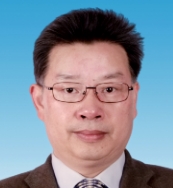
张俊龙博士
联系电话:86-****7034
- 所在单位:北京大学
- 所在城市:北京
- 邮箱:zha****@pku.edu.cn
- 通讯地址:北京市海淀区燕园街道颐和园路5号
详细 · 介绍
Expert introduction
工作简历:
- 2020-至今 北京大学化学与分子工程学院,教授
- 2008-2020 北京大学化学与分子工程学院,特聘研究员
- 2005-2008 University of Illinois at Urbana-Champaign 博士后(导师:Prof. Yi Lu)
- 2000-2001 香港大学化学系研究助理
学术简历:
- 2001-2005 香港大学化学系哲学博士(无机化学),导师:支志明教授,院士
- 1997-2000 中国科学院成都有机化学研究所理学硕士(金属有机化学), 导师: 张良辅教授
- 1993-1997 四川大学理学学士
研究领域:
- 模拟光合作用系统,发展新型金属四吡咯类功能分子;
- 可用于活细胞内重要分子事件检测的发光金属配合物探针;
- 惰性小分子活化与能源化学。
获奖情况:
- 2020 亚洲生物无机化学会(AsBIC)“James Hoeschele Award”
- 2018 欧洲化学出版协会“ChemPubSoc Europe Early Career Award”
- 2018 获得日本化学会“The Distinguished Lectureship Award”
- 2017 获“中国稀土学会青年科学家奖”
- 2016 被美国化学会评为“Emerging Investigators in Bioinorganic Chemistry”
代表性论文:(Perspective and Review)
- Nonaromatic Organonickel(II) Phototheranostics, J. Am. Chem. Soc., 2022, DOI: doi.org/10.1021/jacs.2c00710.
- Metal Modulation: An Easy-to-Implement Tactic for Tuning Lanthanide Phototheranostics, J. Am. Chem. Soc., 2021, 143, 7541-7552
- A Gallium(III) Complex that Engages Protein Disulfide Isomerase A3 (PDIA3) as an Anticancer Target, Angew. Chem. Int. Ed., 2020, 59,20147-20153
- Tri-Manganese(III) Salen-based Cryptands: A Metal Cooperative Antioxidant Strategy that Overcomes Ischemic Stroke Damage In vivo, J. Am. Chem. Soc. , 2020, 142, 10219-10227
- Split and Use: Structural Isomers for Diagnosis and Therapy, J. Am. Chem. Soc., 2020, 142, 6761-6768
- Rational Design of an “All-in-One” Phototheranostic, Chem. Sci., 2020, 11, 8204-8213
- Highly near-IR emissive ytterbium(III) complexes with unprecedented quantum yields, Chem. Sci., 2017, 8, 2702-2709
- Recent progress in metal-based molecular probes for bioimaging and biosensing, Curr. Opin. Chem. Biol., 2022, 66, 102097
- Near-infrared (NIR) lanthanide molecular probes for bioimaging and biosensing, Coord. Chem. Rev., 2019, 399, 213028
- Porpholactone Chemistry: An Emerging Approach to Bioinspired Photosensitizers with Tunable Near-Infrared Photophysical Properties, Acc. Chem. Res., 2019, 52, 2620-2633